 STACK
STACKMoodleMoot Japan 2026

The MoodleMoot Japan 2026 took place 27 February 2026 to 1 March 2026 at the Shizuoka Institute of Science and Technology, Shizuoka, Japan.
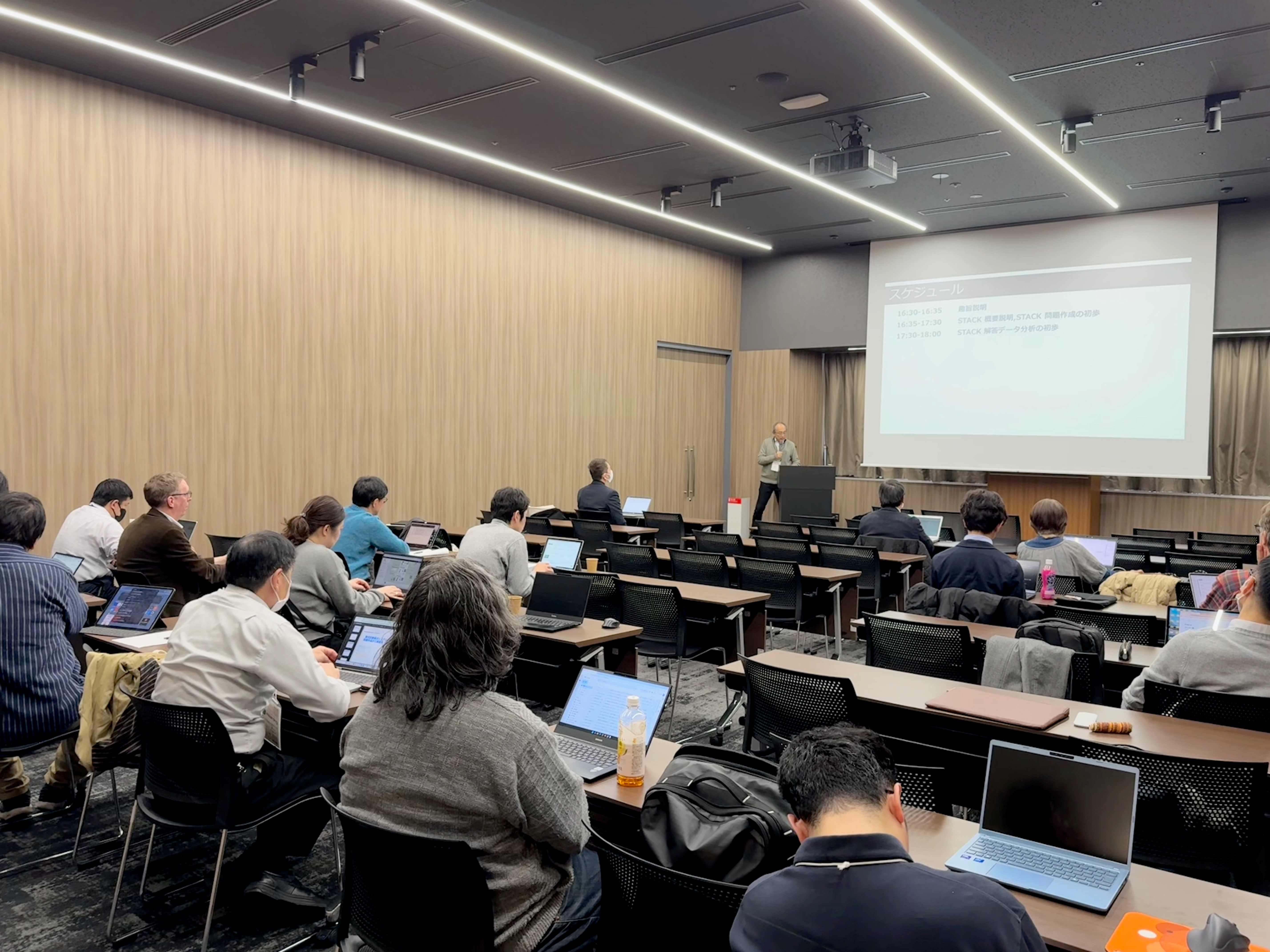
Workshop: From Question Authoring to Answer Data Analysis in STACK
On the Friday, Yasuyuki Nakamura and Chris Sangwin ran a practical workshop helping colleagues get started with STACK. During this workshop, participants worked through the first three sections of the ‘Authoring Quick Start’ guide in the STACK documentation, with many of them creating their very first STACK questions. Afterwards, they used the ‘Analyse responses’ feature to gain a basic understanding of how to analyse response data.
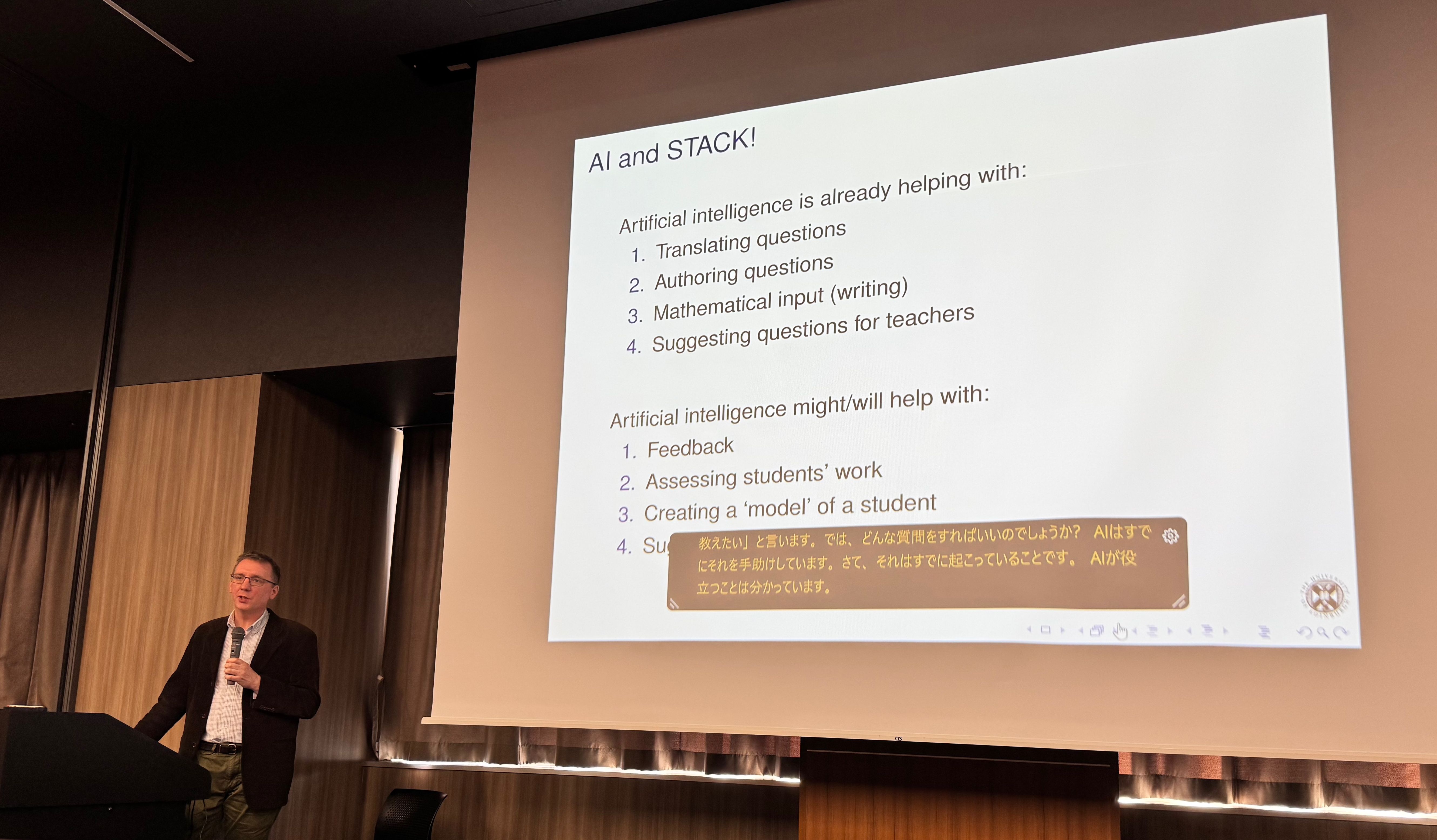
Keynote: What does artificial intelligence mean for automatic assessment of mathematics with STACK and Moodle?
Chris Sangwin (University of Edinburgh) gave a keynote address to the Moot introducing STACK and exploring what artificial intelligence mean for automatic assessment of mathematics with STACK and Moodle. Slides from this talk are available.
Artificial intelligence (AI) systems have become widely used and very useful. AI is sometimes seen as a threat, especially if students use the technology to do work the teacher intended they would undertake themselves. In this talk Chris Sangwin discussed lessons learned from the introduction of previous technology into mathematics education (e.g. electronic calculators) and apply these lessons to contemporary AI. He discussed how introduction of AI encourages us to focus on the goals of mathematics education. Lastly, He talked about how the STACK project, the world-leading open-source online assessment for mathematics and STEM education, plans to make use of AI in the near future to support students, teachers and institutions.
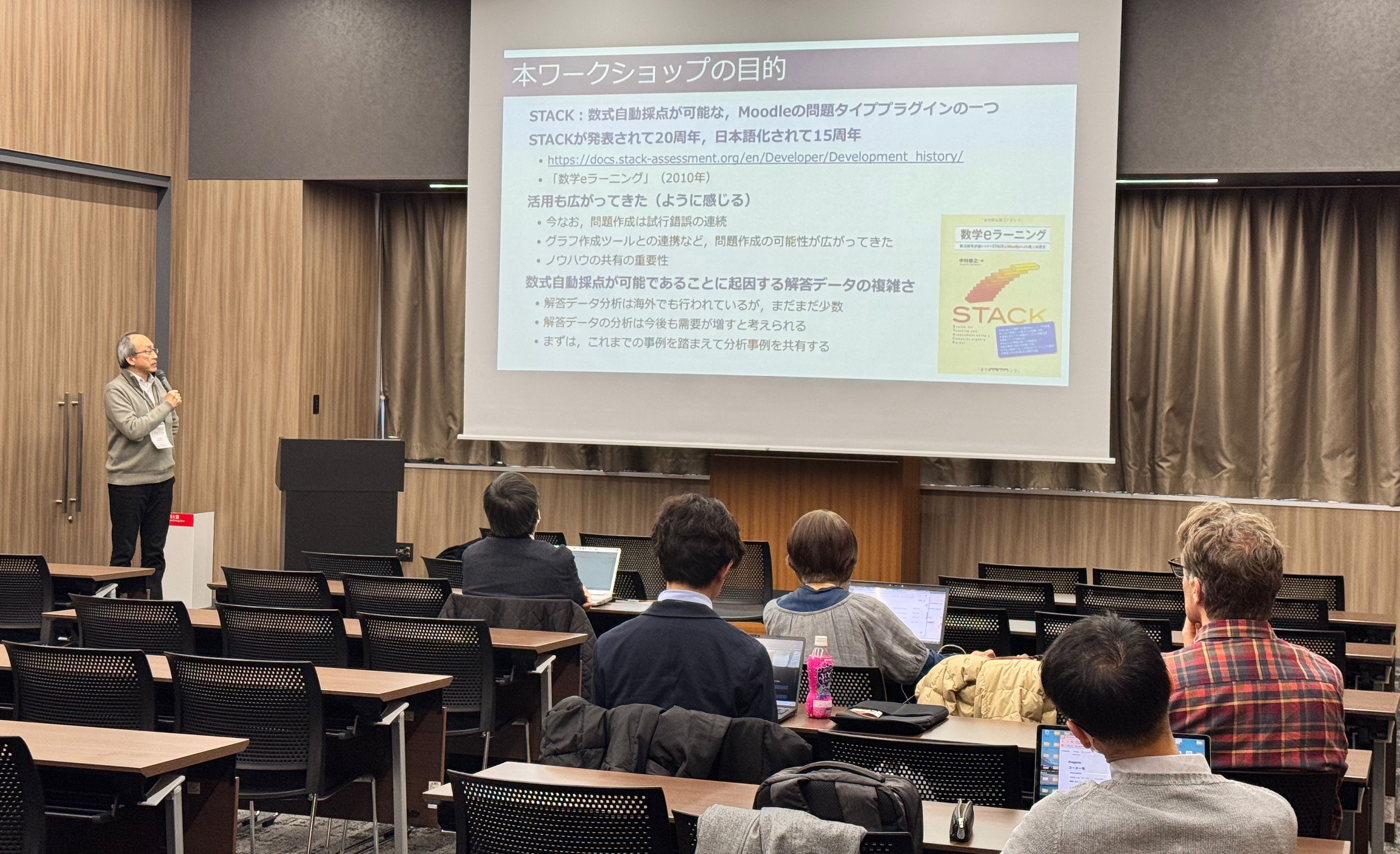
Keynote: A Review of the Introduction, Adoption and Establishment Phases of STACK in Japan
Sunday morning, Yasuyuki Nakamura (Nagoya University) gave a keynote address to the Moot recalling the experience of establishing and popularizing STACK in Japan.
STACK, one of Moodle's question type plugins, is a system capable of automatically evaluating answers entered as mathematical expressions. By utilizing its Potential Response Tree mechanism for evaluation, it enables not only simple pass/fail assessment but also partial credit scoring to infer learners' understanding. By 2025, STACK has been 20 years since its initial release as a stand alone system and 15 years since its Japanese localization. This talk reflected on its journey thus far. Furthermore, based on STACK's unique characteristics he presented examples of answer data analysis undertaken by the presenters.
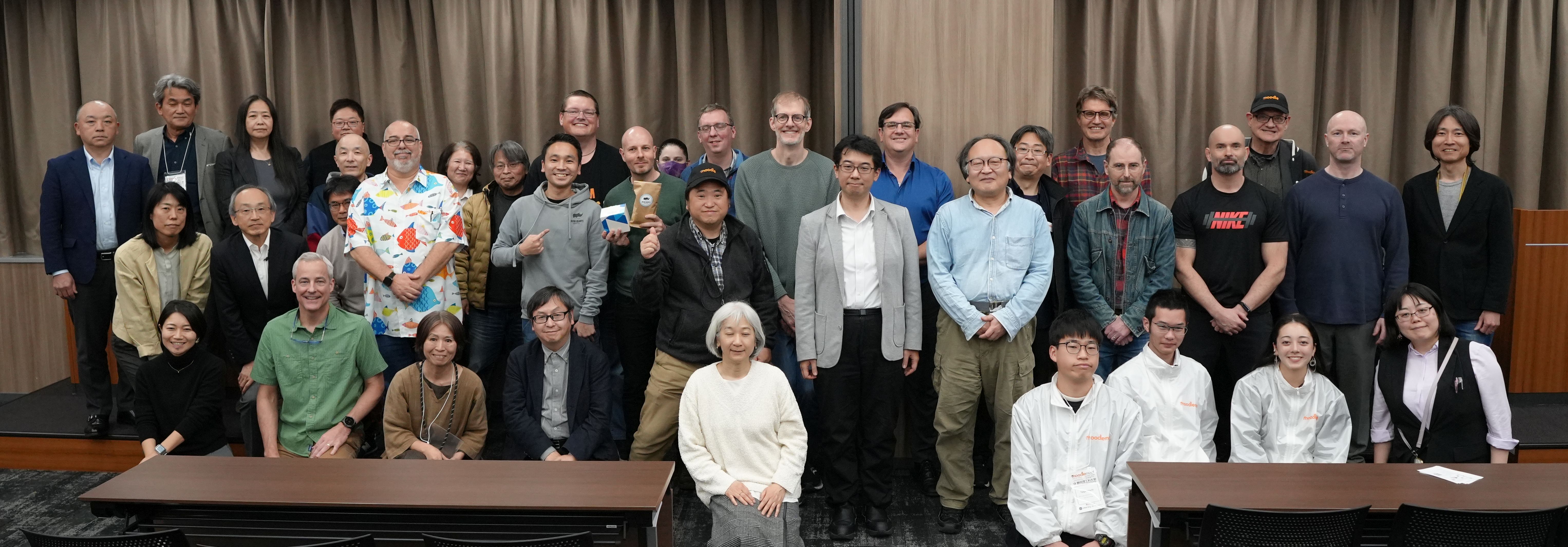
General presentation: Advantages of Using Moodle in the STEM Disciplines
Sunday morning, Jun Saito (Obihiro University of Agriculture and Veterinary Medicine) gave a session talk on the use of various tools, including STACK, on Moodle in STEM education.
He reported on several approaches to utilising Moodle in STEM education, including: 1) an integrated use of learning materials based on dynamic mathematics software such as Cinderella; 2) the use of AI for proofreading laboratory reports in advance of submission; 3) the enhancement of quizzes using STACK; and 4) data science education through integration with JupyterHub via external tools. He then examined the effectiveness and challenges associated with these approaches. Through these initiatives, he discussed the future prospects of practical Moodle applications tailored to the unique and common characteristics of STEM disciplines, such as the variability of temporal and spatial scales that requires analysis through multiple representations (like equation, table, graph/chart, diagram/figure, text, etc.), the emphasis on verifiability through experiments and observations reported with a rigid skill of technical writing, the indispensability of quantitative expression via mathematical formulas and numerical values appropriately handled with cumulative training, and the effectiveness of data processing through programming.
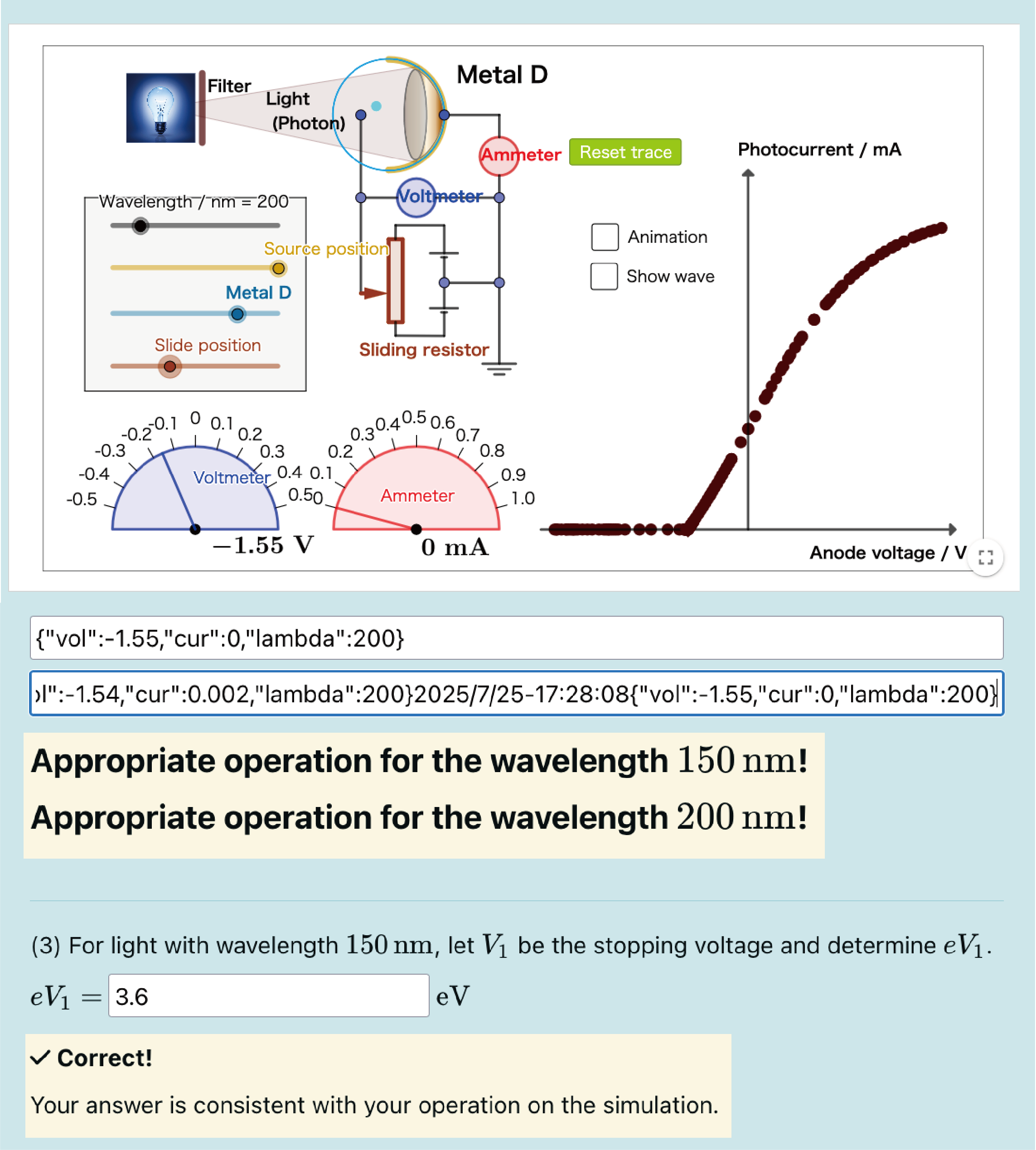
Lightning talk: Localisation of the STACK documentation into Japanese
Sunday afternoon, Yasuyuki Nakamura explained how he and his students localised the STACK documentation into Japanese.
With an R&D grant from the Moodle Association of Japan, they have localised the documentation for the STACK question type—one of Moodle’s question type plugins—into Japanese. Whilst STACK itself has been largely localised, with the exception of a few sections, the documentation that many teachers are likely to refer to when actually creating questions had previously only been localised up to the section covering the basics of question creation. They have now localised the entire documentation into Japanese, and this report detailed the results.
Roundtable: Using STACK in Multiple Disciplines
Sunday afternoon, Jun Saito, Yasuyuki Nakamura, Shigeo Fujimoto (Chiba Univeristy) and Takahiro Nakahara (Sangensha LLC.) presented case studies on the use of STACK in various fields.
STACK is an automated assessment system for mathematical expressions, and can be widely used not only in mathematics education but also in STEM education fields that utilise mathematical expressions. Furthermore, in addition to enabling conditional settings using random variables and multi-stage correct/incorrect judgement using Potential Response Trees, it supports text input (including Japanese), pattern matching, graph plotting, and integration with dynamic geometry software; consequently, it is expected to find application in the creation and marking of a wider range of quizzes. During this roundtable, following a presentation of case studies on the use of STACK in mathematics, physics, chemistry, biology, data science and other fields, participants shared and discussed methods and future prospects for the effective and efficient creation of advanced quizzes across various disciplines. Furthermore, the use of STACK in educational materials other than quizzes via the STACK API was also examined.